Everything You Need to Know About AmyloShield
A New Biological Fungicide for the Horticulture Industry
The market has enthusiastically welcomed AmyloShield, a Bacillus-based biofungicide from Mycorrhizal Applications. In this article, we catch up with Dr. Anissa Poleatewich, Product Development Manager, to learn more about the benefits, traits, and science of AmyloShield®.

Katie Gustafson: Good morning, Anissa! We have an exciting new product on the market. Can you walk us through what AmyloShield is and what it is used for?
(Dr. Anissa Poleatewich): Absolutely. I have seen impressive results with this product and am happy to be sharing information with growers.
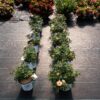
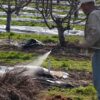
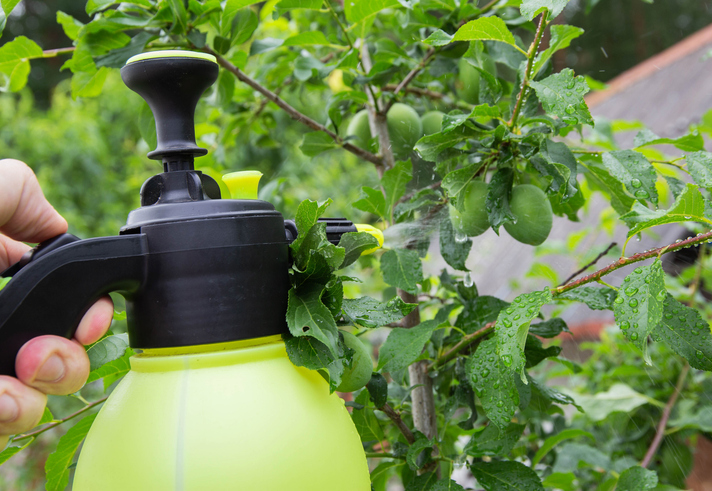
AmyloShield is a wettable, granular biofungicide that offers solid protection and proven efficacy against a wide range of foliar plant diseases. AmyloShield is designed for use in outdoor and greenhouse production systems – which means it works whether you’re growing edibles, ornamentals, or even turfgrass.
(KG): I love the versatility and the fact that AmyloShield has such strong efficacy. Can you walk us through how it works?
(AP): At the heart of AmyloShield is a naturally occurring bacteria, Bacillus amyloliquefaciens, strain PTA-4838. It tackles disease through three main mechanisms:
- Activating the plant’s own defenses
- Crowding out harmful pathogens (competitive exclusion)
- Directly attacking the pathogen (antagonism)
The product contains live spores and powerful antimicrobial compounds called cyclic lipopeptides (CLPs), which are produced by the bacteria during the fermentation process. For foliar applications, it’s these CLPs that do the heavy lifting. The CLPs interfere with pathogen growth and infection on the surface of the leaf, which leads to a reduction of disease symptoms.
But that’s not all — AmyloShield also kickstarts the plant’s immune system through induced systemic resistance (ISR). This prompts the plant to produce its own antimicrobial compounds and strengthen its cell walls, making it harder for pathogens to take hold.
(KG): So, what are CLPs, and why do they matter?
(AP): If you’ve worked with Bacillus-based products before, you’ve probably heard of CLPs. These compounds are nature’s multitaskers; they fight off pathogens, help the bacteria form protective biofilms, and fend off competition.
Rather than relying on a single chemical, Bacillus bacteria make a cocktail of antimicrobial compounds, including CLPs. They work by breaking down the cell membranes of pathogens, causing the invaders to collapse and die.
It’s worth noting that not all Bacillus strains are created equal. Strains vary in their disease suppressive capability due to differences in rhizo competence, production of antimicrobial compounds in the root zone, and interactions with the plant. That’s why strain specificity—like PTA-4838—and the expertise of the manufacturer matters so much. Every step of production – from fermentation, harvest, and processing the microbes, affects the quality of the product.
(KG): I find that absolutely fascinating. I think I know part of the answer to this, but what makes AmyloShield stand out in the world of biofungicides?
(AP): I’m a big believer in this product. Mostly because AmyloShield brings something extra to the table thanks to the unique abilities of strain PTA-4838 and a fermentation process that is fine-tuned to boost microbial growth.
What does this mean for you?
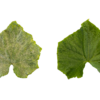
- Consistent performance – in third-party trials, AmyloShield has shown equal or better performance than its competitors. You should take a look at the chart below to see AmyloShield’s performance on Powdery Mildew.
- Long-lasting protection – you can achieve the same results with less applications.
- Works on over 80 pathogens – AmyloShield has a broad label that covers a wide range of fungal and bacterial pathogens.

AmyloShield applied at 2.5 lb/A allows for longer spray intervals while still providing the same level of protection as other biofungicides (at 20 oz/A), saving money on inputs and labor cost through the season.
(KG): Why should a grower use AmyloShield?
(AP): There’s a lot to like. AmyloShield leaves no chemical residues, is gentle on beneficial insects like pollinators and predators, and is a sustainable alternative that both workers and the environment appreciate. It has no Maximum Residue Limit (MRL) and no pre-harvest interval, which is an important consideration for growers exporting to markets with strict residue standards.
Additionally, you can spray AmyloShield right up to harvest, giving your crop a final layer of protection when traditional chemicals aren’t a good fit. Plus, rotating AmyloShield with conventional products adds diversity to your pest and disease management strategy, delaying resistance and keeping your tools effective longer.
(AP): Katie, now I have a question for you. What’s the best way for growers to get this product?
(Kg): Ah, yes. My turn! Mycorrhizal Applications works with a vast distribution network, and AmyloShield is available through all major horticultural distributors. Additionally, our sales team is providing free demos for qualified growers. Growers can reach out to their local sales rep at www.mycorrhize.com or email us directly at inquiries@mycorrhizae.com to set up a demo.